This Old House
- 3.8
- Rating
- 10.00K
- Installs
- Free
- Price

 Analysis by App-foxy
I approached This Old House as a companion for learning about home improvement rather than as a complete project-management tool. That distinction matters from the first screen. The app comes from This Old House, the familiar home-improvement brand, and it is aimed at people who want practical inspiration and guidance in one place on a phone or tablet. I found it most useful when I had a specific household question in mind, but it also works as a relaxed way to browse ideas before deciding what deserves time and money.
It is a free House & Home app for Everyone, although some content or functions can involve in-app purchases ranging from $9.99 to $95.99 per item. That makes the initial download easy to justify, but I would still treat any paid option as a separate decision rather than assuming that every part of the experience is included. The app has a 3.8 average from around 222 ratings and more than 10K installs, so I would describe its reception as mixed but established enough to have a real user base.
Getting from the first screen to a useful home-improvement idea
I use the first visit to move from general curiosity toward a question I can actually act on: what am I trying to understand, and what would count as a useful next step? Keeping that goal small helps me judge the guidance without mistaking broad inspiration for a plan tailored to my home. Next, I look at how to turn that starting point into a practical, grounded idea.
You May Also Like

 Blood Strike: 2.5 Anniversary
Blood Strike’s Loadouts Turn Every Drop Into a Tactical Gamble
A close look at Blood Strike’s custom loadouts: how fast access to signature weapons reshapes its battle royale rhythm, rewards preparation, and narrows the gap between fights.

 Pandora - Music & Podcasts
Pandora’s Music Is Easy to Start, but Harder to Recover
Pandora’s strength is its low-effort path from a seed to a station. Its weak spot is how much confidence it asks you to place in connection, setup, and quiet recovery.

 8 Ball Pool
 Is Built on Rivalries, Rematches, and Routine
A close look at the rivalries, rematches, shared routines, and unanswered safety questions that turn a quick pool match into a persistent mobile community.

 Samsung Music
’s Quiet Strength Is Playing What You Already Own
Its reach comes less from spectacle than from dependable access to a personal library. That simplicity is both the app’s strongest retention engine and its ceiling.

 AccuWeather: Weather Radar
AccuWeather Review: A Quick, Clear Forecast for Everyday Decisions
For everyday plans, the best forecast is the one you can understand quickly. AccuWeather makes rain timing, radar, and local conditions easy to act on, with a few trade-offs.

 Hill Climb Racing
Why Hill Climb Racing Still Turns Crashes Into One More Run
A tiny car, a bumpy hill and one more upgrade: Hill Climb Racing keeps resurfacing because its simple chaos makes every near-miss feel personal.
More From Our News Desk
View All News


What to expect when you open it
The most helpful way to think about this app is as a curated starting point. It can help me understand a repair, compare approaches, gather decorating ideas, or decide what I need to investigate next. It is not a substitute for an on-site inspection, a building professional, or a precise local code check. For a first-time user, that is actually reassuring: I do not need to arrive with a detailed plan. I only need a problem, a room, or a general goal.
The brand identity sets an expectation of practical home advice, and the experience is strongest when I use it with a clear purpose. Searching or browsing without a question can become passive scrolling, especially if I am only collecting attractive renovation ideas. I get more value by choosing a small target such as understanding a drafty window, planning a paint refresh, or learning which questions to ask before hiring someone.
Before relying on any recommendation, I would separate three kinds of information in my notes: ideas, instructions, and decisions that require professional confirmation. An article or guide may explain a sensible general method, while the condition of my own house could change the safe or suitable choice. That simple separation prevents the common mistake of treating educational content as a personalized diagnosis.
Installing and making the first setup less frustrating
The app was released on December 10, 2019, and the current version is 2.0.500017 - P.d5a1cea3d. It supports devices running Android 6.0 or later. After installing, I would give myself a few minutes to look around before judging it. The first useful setup is not about filling in a profile; it is about learning how the content is arranged and deciding what kind of visit I want to make.
I recommend starting with one room or one type of task. “Kitchen” is still too broad for a productive first session, while “make the kitchen feel brighter without replacing cabinets” gives me a filter for everything I read. If the app presents several possible directions, I can quickly mark down the ones that fit my budget, tools, confidence, and available time. Even without a formal project planner, this turns browsing into preparation.
Another good habit is to keep a separate note on the device for measurements, product names, questions, and links I may want to revisit outside the app. I would not assume that an article alone will become a complete shopping list. Instead, I use the app to learn the vocabulary of the task, then verify sizes, compatibility, and local availability elsewhere. That workflow is more reliable than buying something simply because it appeared beside an appealing project.
New users may also wonder whether the free download means every experience is free. The app costs nothing to install, but optional purchases are part of the overall offering. I would explore the free material first and only consider a paid item after deciding exactly what problem it solves. A purchase makes more sense when it gives me a clearly defined resource for a project I am ready to start, not when I am still browsing for inspiration.
The first meaningful success: turn one article into a safe next action
My recommended first session is deliberately small. I would choose a minor issue, such as a sticking interior door or a wall that needs a cosmetic refresh, and look for guidance that helps me identify the likely causes and the tools involved. The goal is not to complete a dramatic renovation immediately. The goal is to finish the session with one sensible action: inspect a hinge, photograph a damaged area, measure a surface, or write down a question for a contractor.
This approach exposes one of the app’s quiet strengths. Home-improvement content often feels overwhelming because projects are described as large transformations. I find it more useful when I reduce the material to a decision tree: what am I seeing, what can I safely check, what information do I need, and when should I stop? The app can support the learning part of that process, while I remain responsible for judging the actual condition of the home.
For example, if I am investigating a cold room, I would not jump straight to buying insulation or replacing a window. I would use the guidance to learn the terms involved, inspect obvious areas, and list the evidence I need. I might check whether the issue is limited to one opening, whether the frame shows visible damage, or whether the problem changes with weather. That produces a better conversation with a professional than simply saying that the room feels uncomfortable.
A similar method works for decorating. Rather than saving dozens of images, I would select one visual direction and identify its practical consequences: preparation, lighting, cleaning, durability, and the order of work. The app is especially useful at the inspiration-to-planning boundary. It helps me move from “I like this room” to “which part of this look is realistic for my space?”
Where first-time users can become confused
The biggest possible confusion is expecting the app to behave like a dedicated renovation planner. A project-management app normally focuses on tasks, schedules, costs, and materials. This Old House is better approached as a source of home-improvement knowledge and ideas. I would use a notes app, spreadsheet, or dedicated planner alongside it if I needed a detailed budget, contractor comparison, or room-by-room schedule.
A second point of friction is the difference between general advice and a house-specific answer. Homes vary by age, construction, climate, previous repairs, and local requirements. A clear explanation can still leave important questions unanswered for my particular property. I would be cautious with electrical, structural, gas, roofing, and moisture-related work. In those situations, the most valuable result may be knowing what to ask a qualified professional, not attempting the job myself.
It is also easy to confuse visual inspiration with a realistic scope of work. A polished room can hide preparation, disposal, surface repairs, ventilation concerns, and the time needed between stages. When I use the app for design ideas, I try to translate each image into practical questions. What has to be removed? What must remain accessible? How will the finish cope with children, pets, humidity, or frequent cleaning? Those questions keep the browsing experience grounded.
The rating of 3.8 suggests that not every user will find the experience equally smooth. I would not interpret that as a reason to dismiss it, but I would keep expectations measured. Content discovery may feel more useful to one person than another, and someone looking for a highly specialized technical reference may outgrow it quickly. The app’s value depends heavily on whether its broad home-improvement focus matches the question I bring to it.
Three practical ways to get more from it
First, I would use it before visiting a hardware store, not while standing in an aisle trying to improvise. Reading about a task beforehand helps me identify the correct terms and avoid buying several vaguely related products. I can then compare the app’s general guidance with package instructions and ask a store employee a focused question. This saves time and reduces the chance of treating a familiar-looking item as a universal solution.
Second, I would use it as a contractor-interview tool. Before requesting an estimate, I can learn the basic language of the project and prepare questions about preparation, materials, ventilation, cleanup, and what could change the price. I am not trying to sound like an expert. I am trying to notice whether the explanation is clear and whether the proposed work addresses the actual problem. That is a more valuable use than copying a tutorial step by step.
Third, I would revisit the same topic after inspecting the space. The first reading gives me a rough map; the second reading can answer better questions because I now know what I am seeing. This two-pass method is particularly useful for older homes, where a seemingly simple repair may reveal previous alterations. I would record observations rather than relying on memory, especially if I plan to compare professional opinions.
One trade-off is that a broad library can encourage me to start too many projects. To prevent that, I would choose one “now,” one “later,” and everything else as inspiration. The app is good at opening possibilities, so I need an external limit. A short list with a reason for each project—comfort, safety, maintenance, or appearance—keeps the experience from becoming an endless renovation wish list.
How it compares with the usual alternatives
Compared with general web searches, the app offers a more focused home-improvement context. A search engine can produce highly technical manuals, retailer pages, forum discussions, and videos of uncertain quality all at once. That variety is useful when I need a niche answer, but it also makes it harder to judge where to begin. This Old House gives me a more coherent starting point, especially when I am still learning the vocabulary.
Compared with short-form video platforms, the app is a better fit for deliberate reading and planning. Videos can show motion and technique quickly, but they can also make a job look easier than it is and encourage me to skip preparation. I prefer using the app to understand the sequence and risks, then watching a demonstration only if I need to see a particular movement. Neither format replaces checking the condition of my own home.
Compared with retailer apps, it is less centered on immediate purchasing. That is an advantage when I am deciding what to do, because I am not beginning with a product category. Retailer tools become more useful once I know the exact specification, quantity, or finish. I would use This Old House for orientation and a retailer or manufacturer source for current compatibility, instructions, and availability.
Finally, compared with a local professional, the app is cheaper and more convenient for learning but cannot inspect the property. If the issue involves safety, hidden damage, or a costly mistake, professional judgment is the better option. I see the app as a way to arrive at that conversation better prepared, not as a way to eliminate the conversation.
Who should install it, and who should skip it
I would recommend it to a first-time homeowner, a renter who wants maintenance knowledge, or anyone preparing for a small improvement and unsure how to frame the problem. It is also useful for people who enjoy learning through examples before committing to a project. The Everyone age rating makes it approachable for a broad household audience, though adults should still supervise any hands-on work involving tools, chemicals, height, heat, or electrical systems.
I would be less enthusiastic for an experienced remodeler seeking detailed trade documentation, a buyer who only wants instant product comparisons, or someone who needs a precise cost calculator and task schedule. Those users may be better served by specialist references, manufacturer documentation, professional estimating tools, or direct advice from a qualified contractor.
I would also skip it as a primary resource if my only goal were emergency troubleshooting. A serious leak, burning smell, suspected structural movement, or electrical fault calls for immediate practical help, not leisurely browsing. The app can help me learn later, but it should not delay appropriate action.
My next-step routine after the first visit
After finding useful material, I would write a compact project brief: the problem, what I observed, what I want to improve, what I do not know, and the next safe action. Then I would gather only the information needed for that action. If the next step is a measurement, I measure. If it is a professional consultation, I prepare questions. If it is a cosmetic test, I try it in a small area before committing to the whole room.
I would also check whether a paid item genuinely fits that stage. Since optional purchases can be substantial, I would avoid paying simply to continue browsing. The right time to spend is when I can name the decision the purchase will support and explain why free general guidance is not enough for that decision. That keeps the app from turning curiosity into an accidental project expense.
Overall, I found This Old House most convincing as a calm, approachable first stop for home-improvement learning. Its free entry point, recognizable focus, and broad usefulness make it easy to try, while its limitations remind me to use it thoughtfully. My strongest recommendation is to treat every visit as preparation for one concrete, safe action, not as a replacement for inspection, professional judgment, or detailed project management.
For me, that balance is the reason to keep it installed. When I have a vague household concern, it can help me name the problem and make a sensible plan. When I already need exact specifications, local compliance advice, or a complete renovation workflow, I reach for a more specialized alternative. Used in that narrower but realistic role, it becomes a practical companion rather than another app full of ideas that never leave the screen.
FAQs for This Old House
01What is This Old House?
This Old House is a home-improvement and renovation app designed for people who enjoy remodeling, repairs, maintenance, design, and DIY projects. It brings together practical guidance, project inspiration, expert advice, and helpful information based on the well-known This Old House brand. It can be useful for beginners planning their first repair as well as experienced homeowners looking for ideas and reliable techniques.
02What can I do with the This Old House app?
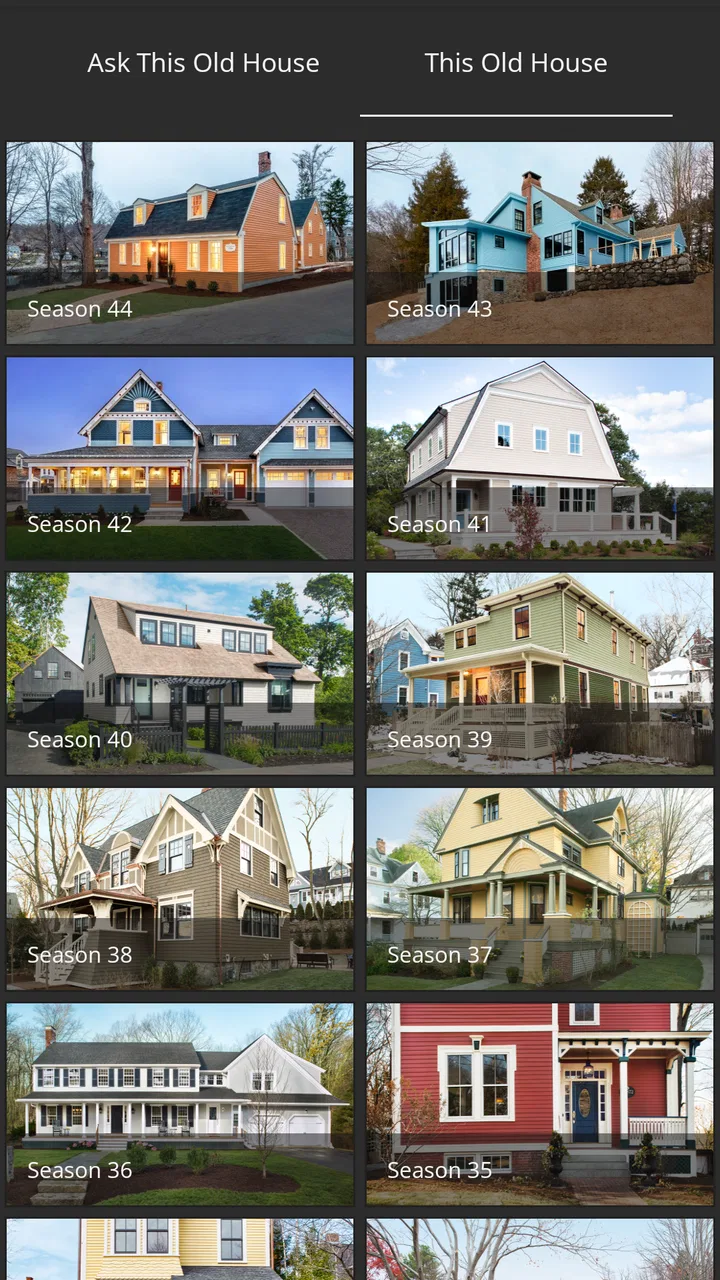
The app lets you explore home-improvement content covering renovations, woodworking, plumbing, electrical work, gardening, decorating, tools, and general home maintenance. Depending on the available version and region, you may be able to browse articles, watch videos, save interesting projects, and discover step-by-step advice. I found the content especially useful when comparing project approaches before starting work at home.
03Is This Old House suitable for beginners?
Yes, This Old House is generally suitable for beginners because many topics are explained in an accessible way, with practical details and project context. However, not every task is appropriate for someone without experience. Electrical, structural, roofing, gas, and major plumbing work can involve serious risks, so the app should be treated as an educational resource rather than a substitute for a qualified professional or local building regulations.
04Is the This Old House app free to download and use?
Availability, pricing, and included features may vary depending on whether you use the Android or iOS version and your location. Some content may be accessible without payment, while certain features, subscriptions, advertising, or links to external services can differ over time. Before downloading or subscribing, check the current store listing carefully for in-app purchases, account requirements, and any terms connected with premium content.
05Does This Old House provide reliable advice for real renovation projects?
The app offers useful guidance and inspiration from the This Old House editorial and television brand, making it a valuable starting point for planning repairs and renovations. Still, homeowners should verify measurements, materials, safety requirements, permits, and local codes before beginning a project. Conditions differ from one house to another, so professional inspection may be necessary for complicated, dangerous, or expensive work.
Pros
- Practical renovation advice from trusted home-improvement experts.
- Clear project guides help homeowners plan repairs with confidence.
- Useful inspiration for remodeling
- decorating
- and outdoor projects.
- Covers both basic maintenance and more advanced home upgrades.
- Helpful tips can support better decisions before hiring a contractor.
Cons
- Some advice may not suit local building codes or climate conditions.
- Certain projects require tools
- skills
- or safety gear beginners may lack.
- Older articles may reference products or techniques that have changed.
- Large projects can become expensive despite the initial guidance.
- Content may focus more on U.S. homes
- materials
- and contractors.

This Old House
Gallery